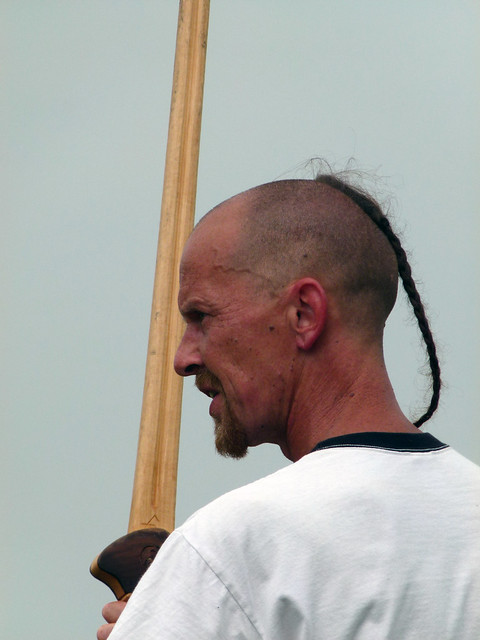
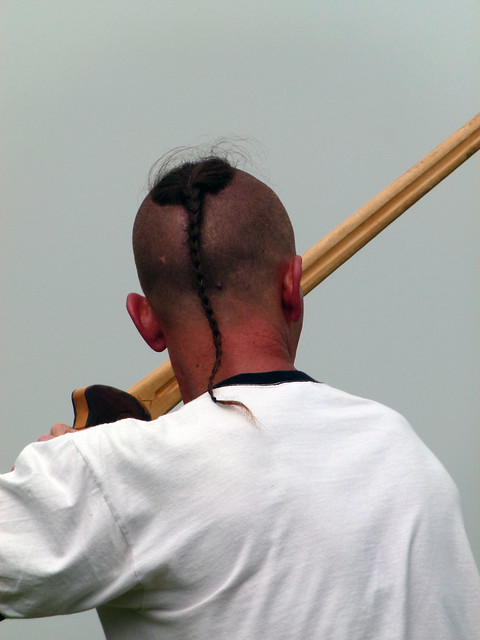
Agfa Jsoly met Film Washi S, 60 minuten standontwikkeling in Adox Rodinal. Foto’s gemaakt in het Gimbornof, Zevenaar, eind mei 2020. Het is duidelijk te zien dat het tijdens foto 1 een stukje zonniger was dan tijdens foto 2.
Posts tonen met het label taiji. Alle posts tonen
06 juni 2020
18 augustus 2019
15 augustus 2014
22 november 2011
22 augustus 2011
13 juni 2011
jestli se nepletu...: Tchaj-ťi čchüan versus Cheng Hsin
jestli se nepletu...: Tchaj-ťi čchüan versus Cheng Hsin: "V reakci na článek o tchaj-ťi jsem byl požádán o pokračování na téma rozdíl mezi tchaj-ťi a cheng hsin . Zdánlivě snadná věc pro člověka..."
21 december 2010
Footnodes
de Nederlandse Vereniging voor Traditionele Chinese Geneeskunde,
december 2010
07 juli 2010
22 februari 2010
"Taiji quan, in contrast to popular constructions, is not Daoist in origin"
On Relation Between Taiji and Daoism:
Sometimes mispronounced “tai-ch’i,” Taiji quan 太極拳 (T’ai-chi ch’üan) literally means “Supreme Ultimate Boxing.” Here Taiji 太極 (lit., “great ridgepole”) refers to yin-yang interaction, so that the modern Taiji diagram is the Yin-yang symbol. This diagram is sometimes used as a symbol for Chinese martial arts by martial artists and sometimes as a symbol for Daoism by Daoists. These two are often conflated in the popular understanding of “Daoism.” Historically speaking, it is unclear when the modern Taiji diagram was created (cf. the Taiji tu 太極 圖 by Zhou Dunyi 周敦頤 [1017-1073]) and when Chinese Daoists began using it. In earlier Daoist history, the “yin-yang symbol” referred to the image of a tiger and dragon. The modern version may have been adopted by Daoists to compete with the symbolic representations of other religious traditions: the cross of Christianity, swastika of Buddhism, crescent moon of Islam, Star of David of Judaism, and so forth.

Diagram of Taiji by Zhang Huang 章潢 (1527-1608)
De rest van het artikel (op O taijiquano)
Sometimes mispronounced “tai-ch’i,” Taiji quan 太極拳 (T’ai-chi ch’üan) literally means “Supreme Ultimate Boxing.” Here Taiji 太極 (lit., “great ridgepole”) refers to yin-yang interaction, so that the modern Taiji diagram is the Yin-yang symbol. This diagram is sometimes used as a symbol for Chinese martial arts by martial artists and sometimes as a symbol for Daoism by Daoists. These two are often conflated in the popular understanding of “Daoism.” Historically speaking, it is unclear when the modern Taiji diagram was created (cf. the Taiji tu 太極 圖 by Zhou Dunyi 周敦頤 [1017-1073]) and when Chinese Daoists began using it. In earlier Daoist history, the “yin-yang symbol” referred to the image of a tiger and dragon. The modern version may have been adopted by Daoists to compete with the symbolic representations of other religious traditions: the cross of Christianity, swastika of Buddhism, crescent moon of Islam, Star of David of Judaism, and so forth.

Diagram of Taiji by Zhang Huang 章潢 (1527-1608)
De rest van het artikel (op O taijiquano)
12 februari 2010
Chi Chiang Tao (1920 - 1994)

Dr Chi Jiang Tao – Honoring the master of yielding (chichiangtao.com)
Dr Chi Chiang Tao, Engelstalig artikel door Richard Farmer (1998)
Aangetroffen naamvarianten tot nu toe: Chi Chiang Tao, Chi Kiang Tao, Chi Jiang Tao, Chi Chiang-tao, Qi Qiang Tao, Qi Qiang Dao
29 november 2009
05 september 2009
North Sea Tai Chi 2009
Op northseataichi.nl vind je meer dan 400 foto's van het eerste North Sea Tai Chi-festival, 28, 29 en 30 augustus 2009 op Recreatiegebied Spaarnwoude, even buiten Haarlem.


Labels:
Haarlem,
push hands,
pushing hands,
t'ui shou,
tai chi,
taiji,
推手
03 juli 2009
Yang Cheng-fu versus Dong Yingjie
Mooie vergelijkende foto's van Yang Cheng-fu en Dong Yingjie die de traditionele Yang-stijl doen.


De volledige set foto's is te zien op de site van de Nordisk Tai Chi Chuan Forening.


De volledige set foto's is te zien op de site van de Nordisk Tai Chi Chuan Forening.
02 januari 2009
Draag de tijger naar de berg
10 december 2008
Abonneren op:
Reacties (Atom)